Why Practical AI Analytics Matter for Accounting Firm Leaders

As a firm owner or partner, investing in AI (like any other business investment) comes with commercial scrutiny: What is it adding to our monthly overhead? Is the team actually using it? And are we seeing real efficiency gains, or are we just paying for another tech subscription?
Employees care about getting through their work, but leaders carry the responsibility of cost control, technology ROI, and practice governance. Without clear data, rolling out generic AI can feel like funding a black box - you see the invoice at the end of the month, but you have no understanding where the spend went.
To make AI work long term for accounting firms, usage metrics are essential.
Clear metrics can positively change the way a firm manages AI. Having this data readily available is transformational for practice managers in modern accounting firms.
Complete cost transparency and fair internal cost allocation
One of the biggest hurdles for practice managers when considering consumption-based technology is the fear of unpredictable overheads and potential bill shock.
Firm leaders need visibility over:
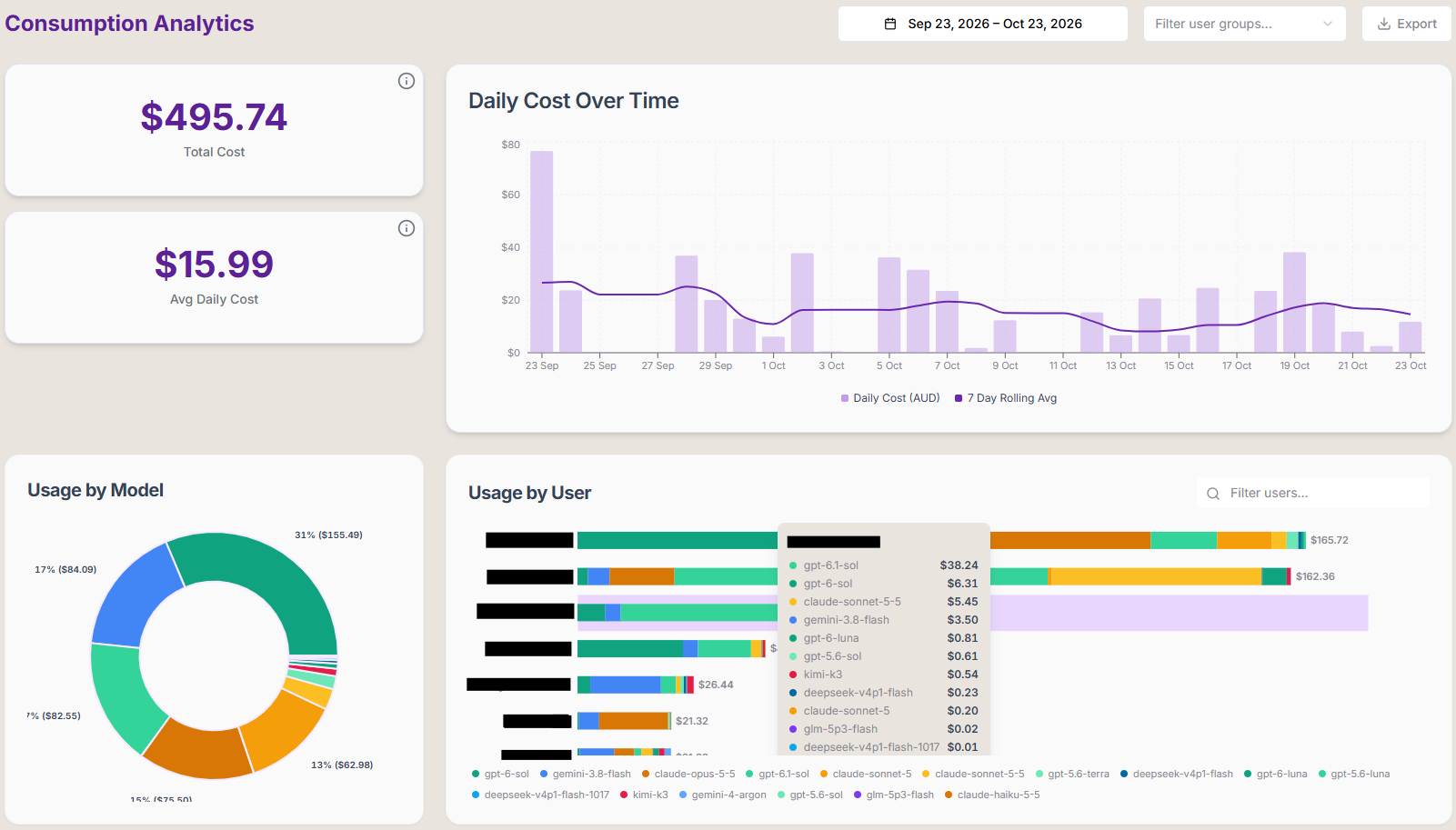
- Daily and individual consumption: Knowing what the practice is spending day to day, monitoring averages, and seeing which underlying AI models are being used for deep technical analysis versus quick daily drafting.
- Divisional recharge capability: In a multi-disciplinary accounting practice, technology overheads should not sit in one generic overhead line. Being able to filter usage by group—such as Business Services, Audit, Bookkeeping, or Private Clients—allows leadership to allocate technology costs directly and fairly to the division using them.
- Predictable budgeting: Spotting spend patterns early prevents end-of-month surprises and gives the finance team clean data for budgeting.
Knowing who is embracing AI (and who needs support)
Software uptake across an accounting practice is never identical. Some accountants run with new technology immediately, while others hesitate or are unsure where it fits into their day-to-day work.
Clear engagement metrics give leaders an objective snapshot:
- Spotting internal champions: Identifying which team members are logging regular interactions and finding practical wins. These individuals become your natural advocates—the peers who can share effective prompts and shortcuts across the wider team.
- Targeting training where it counts: When leaders see low interaction counts, it rarely points to disinterest; it usually highlights a lack of confidence. Visibility allows managers to step in with tailored coaching and support early, rather than wondering months later why adoption stalled.
Visibility over practical accounting workflows
A high chat count looks positive, but practice leaders care about practical output. The real question is: what kind of work is the team actually completing?
Tracking capability and workflow usage helps leaders:
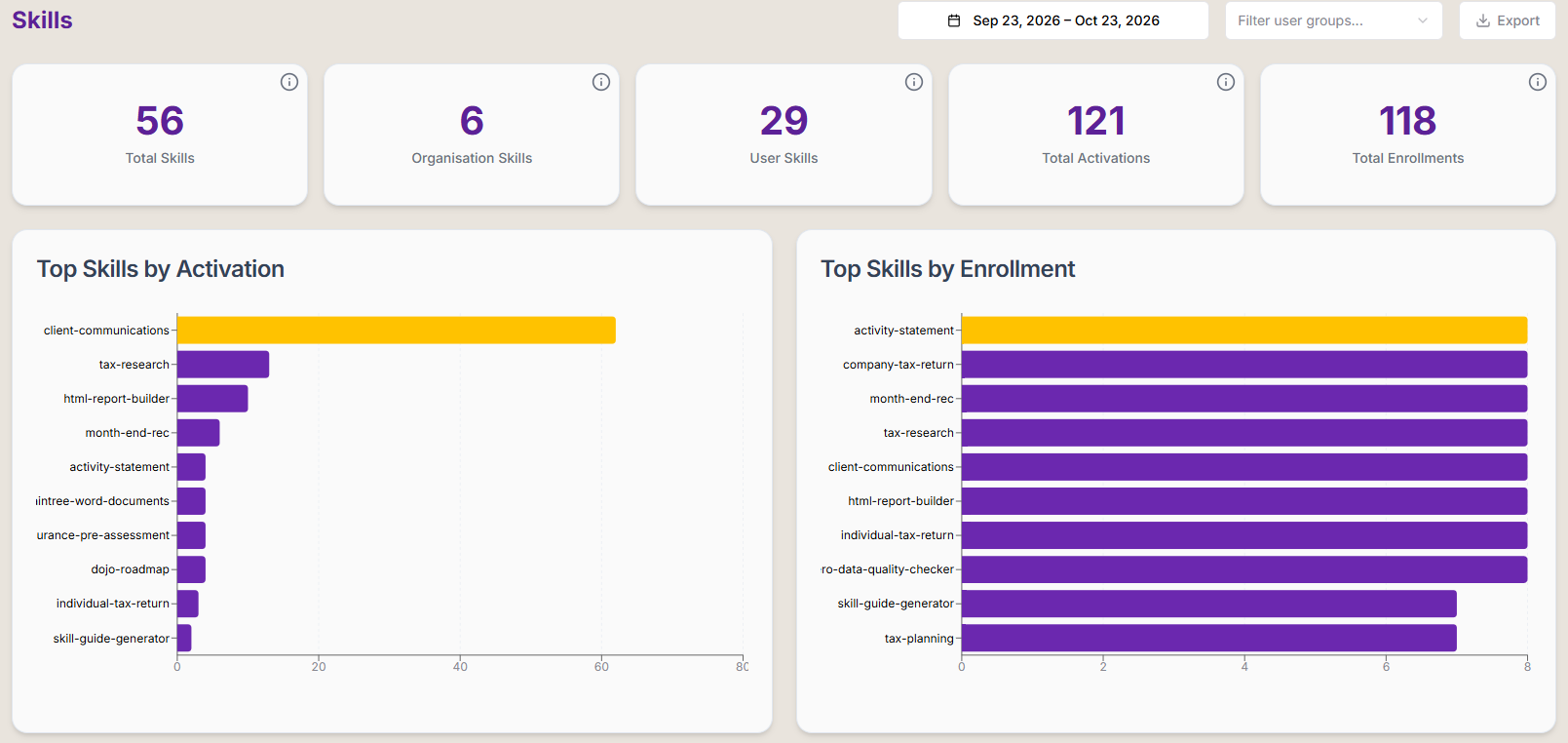
- See genuine workflow integration: Monitor whether staff are using AI for specialised accounting tasks—such as balance sheet reconciliations, tax reviews, or client correspondence—rather than just ad-hoc queries.
- Measure real productivity gains: Gain tangible evidence of where the firm is recovering chargeable hours across routine compliance and advisory tasks.
- Guide continuous improvement: If compliance tools are running at full speed while advisory workflows sit idle, it highlights exactly where the practice might need a refreshed process or a short coaching session.
Understanding team work patterns
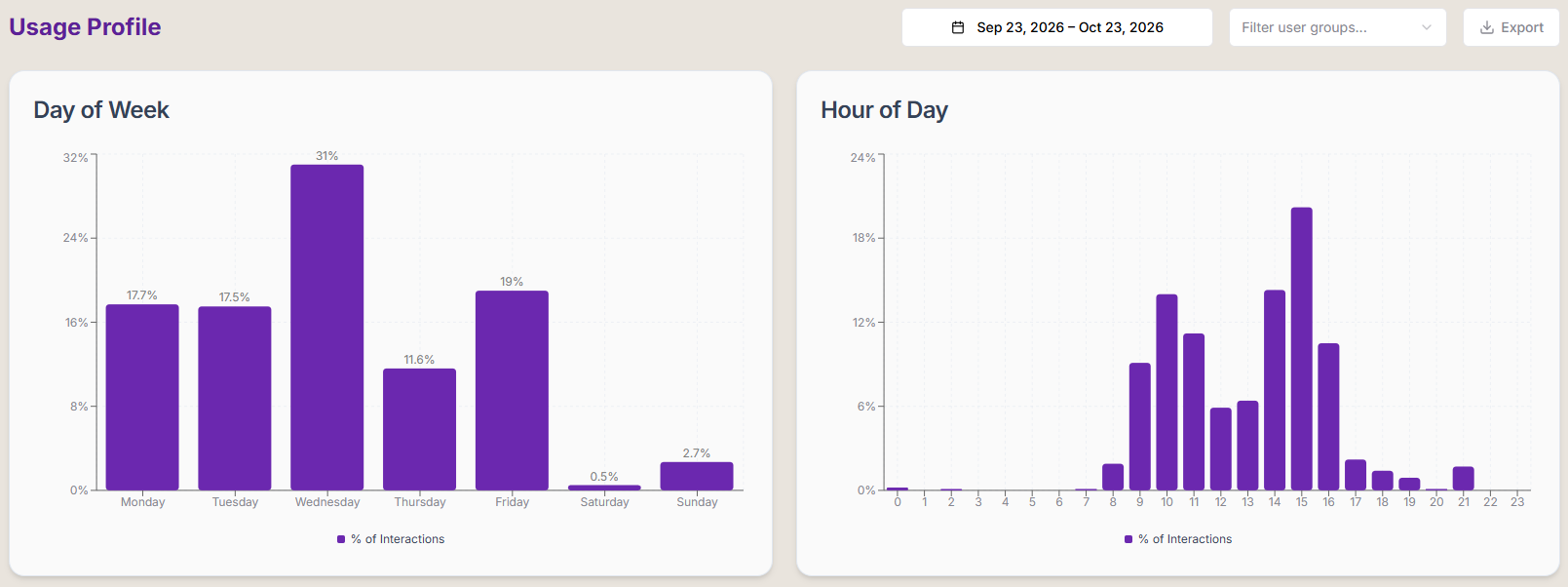
Time-based usage data provides an interesting operational read for practice managers.
Seeing when accountants lean most heavily on AI support - whether that aligns with mid-week compliance crunches or end-of-month reporting peaks - helps leaders confirm that the technology is actively absorbing pressure when the team needs it most.
Bringing governance and visibility together in Dojo.
AI should never be an unmonitored firm expense. Having granular cost, usage, and workflow data turns AI from an uncertain overhead into a governed, accountable asset for your practice.
This is exactly why we built the Analytics Centre directly into Dojo, our dedicated AI workspace for accounting firms.
Within Dojo, firm leaders have real-time access to:
- Consumption Analytics: Granular daily cost breakdowns by user, model, and department.
- User Engagement & Usage Profiles: Clear visibility on active chats, interaction counts, and peak usage times across the week.
- Skills Analytics: Tracking which accounting-specific skills are driving real workflow adoption across your firm.
It gives practice leaders the data they need to manage budgets, allocate internal costs accurately, and support their team as they build genuine AI capability.
Curious to see what AI usage and cost visibility looks like in practice? If you're already using Dojo, check out the Analytics Centre in your admin portal. If you're exploring AI for your firm, get in touch with our team for a walk-through.
Looking to make a practical difference in your firm?
See how Dojo's Analytics Centre gives your firm complete visibility over AI cost, usage and adoption. Book a short walkthrough with our team or learn more about the platform.
Looking to make a practical difference in your firm?
Get in touch to learn how AI Dojo could benefit your organisation
BOOK A DEMO